Name It in Four Notes
- allegretto
- quick, with a pencil ready
Between songs in a late set there is often a pause while the musicians tune or trade a joke, and in that pause a game breaks out at one of the tables. Someone taps the first few notes of a melody on a glass, or hums them low, and the others race to name it. Four notes is the usual limit. Get it in three and you can be insufferable for the rest of the evening.
What the game asks for
Recognizing a tune from a fragment is a remarkable thing when you stop to think about it. The ear catches a handful of pitches and a rhythm; somewhere behind the eyes a search runs through decades of listening; and a title, a singer or at least a decade comes back, sometimes in a second. When it works, it feels effortless. When it almost works, when the answer sits on the tip of your tongue, you can actually feel the searching.
That tip-of-the-tongue state is common at every age and tends to become more familiar as the years go by. Rather than resent it, the game turns it into play. You are allowed to wait, to hum the fragment again, to let the answer come up on its own time.
The kitchen-radio version
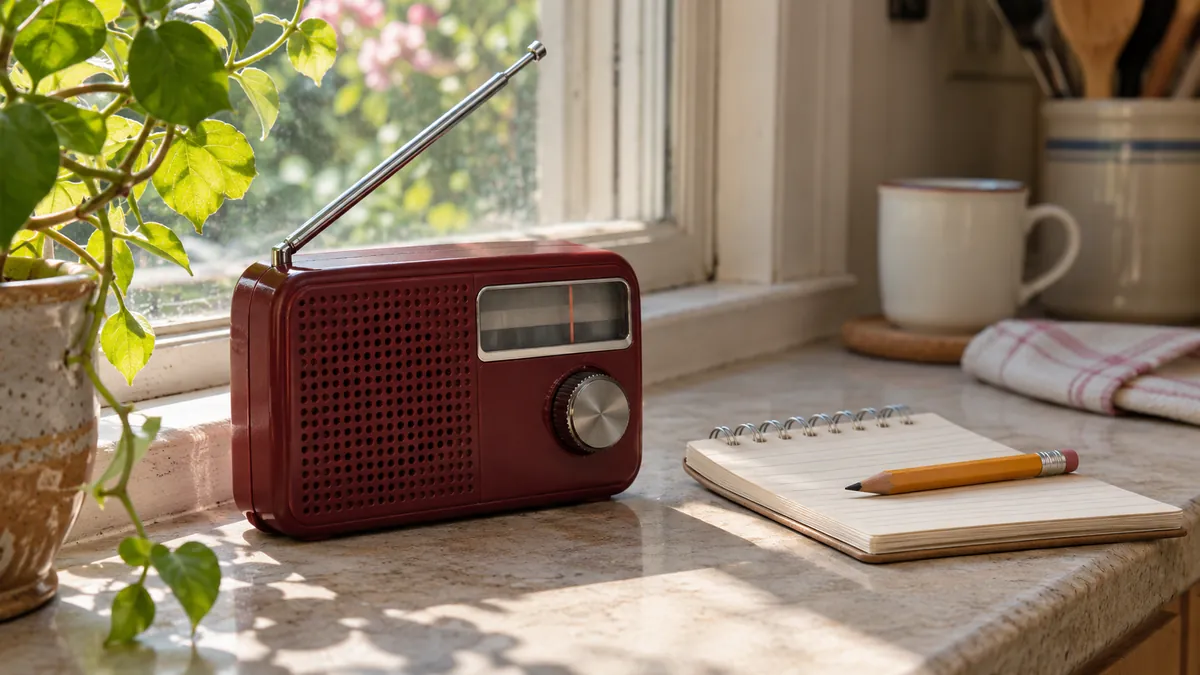
You do not need a band or a bistro. Keep a small radio near the place where you make breakfast, tuned to a station that plays older music. When a song starts, turn your back to the radio and try to name it before the singer comes in. Write the guess on a notepad before the voice confirms or corrects you. One point for the title, half a point for the artist, a quarter for the right decade.
Play for the length of one cup of coffee. Keep the scores on the same pad, dated, and look back over a month of them now and then. The numbers do not mean much on their own; what tends to change is how quickly you settle into listening once the game starts.
Listen to one instrument
A harder variation: once you have named the song, pick one instrument, the bass line or the drums or a quiet piano under everything, and follow only that part until the end. It is surprisingly difficult to keep your attention on a single thread while the rest of the music competes for it. Many people find their focus drifting within a minute. Notice where it went, bring it back, and try again on the next song.
At the table
With friends the game becomes a conversation. Wrong guesses lead to stories about the song somebody thought it was. Arguments about which band recorded it first lead to a phone being reached for, which is fine, as long as the guess was written down before anyone checked.
A gentle house rule helps: the person who guesses right picks the next fragment, and the person who has gone longest without a point gets a hint, the decade or the first letter of the title. That keeps the slower guessers in the game and turns it from a contest into something closer to a shared puzzle, which is where the real fun lives.
Why fragments work so well
Four notes are not much information. To get from them to a title, the listener has to compare a tiny pattern against a lifetime of stored songs, discard the near misses and settle on one. It is a quick, playful version of a skill used all day long: recognizing a voice on the phone before the caller says their name, spotting a friend's walk across a parking lot, knowing which drawer holds the scissors. Practicing it with music simply makes the practice pleasant enough to repeat.