One Night a Week, Same Table
- lento
- unhurried, every week
Any place that hosts live music has its regulars, and the regulars have their table. They arrive at roughly the same hour, order roughly the same plate, and wave at the same two or three faces across the room. From the outside it can look like a rut. From the inside it is closer to a fixed point on a map: whatever the rest of the week did, this evening will be here, and the people at this table will want to know how it went.
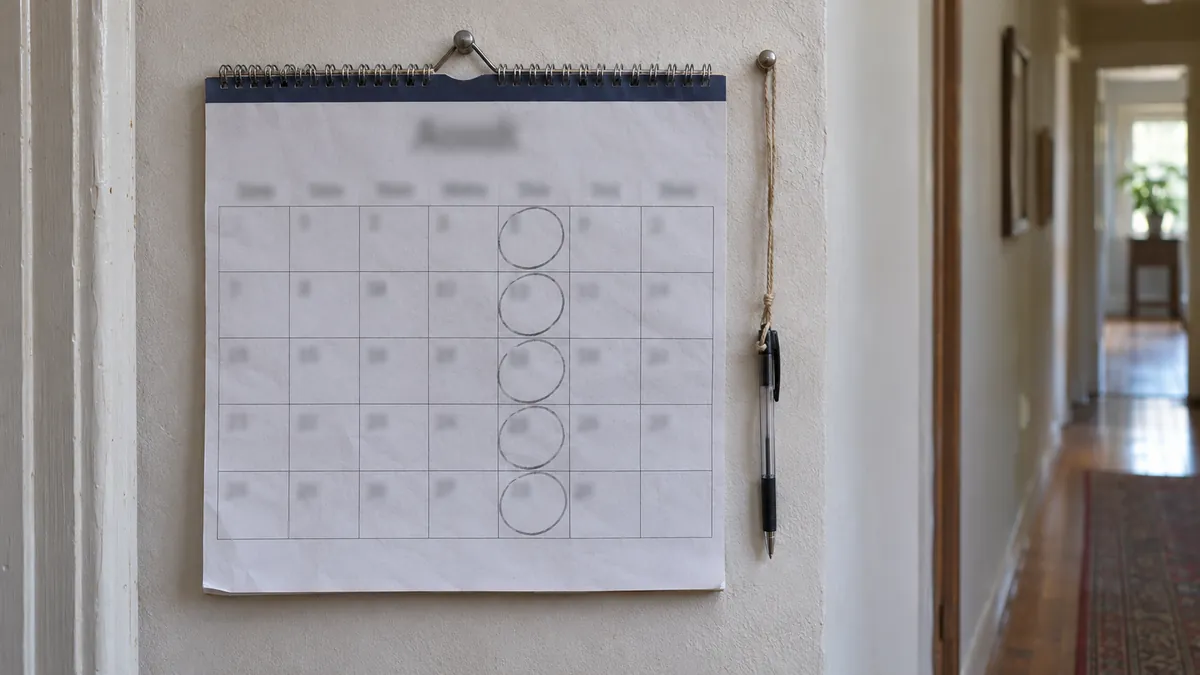
A fixed point in the calendar
After the working years wind down, days can start to blur. Monday and Thursday look alike when no meeting or commute marks them apart. A standing evening, the same weekday at the same hour, gives the week a shape you can count from. People who keep one often say they know what day it is without checking, because they know how many days remain until the next one.
Write it down even though you will not forget it. Circle the day on a paper calendar on the wall, every week, for the whole month ahead. The act of circling is a small weekly appointment with your own plans.
The work of remembering people
A regular table is also a regular exercise in keeping track of other lives. Who had the hospital visit? Whose daughter moved to another state? Who promised to bring the photographs next time? Holding those threads from week to week asks a lot of attention, and people notice quickly when you have kept one. Asking how the visit went, by name and with the right detail, is one of the warmest things a person can do at a table.
Some regulars keep a pocket notebook for exactly this. On the ride home, they jot a line or two: a name, a worry, a date someone mentioned. Before leaving the following week, they read the page. It is not cheating. It is the same thing a good host does before a party.
When the week gets in the way
Standing dates are easy to break and hard to rebuild. If you have to miss a night, call or message someone at the table that evening, so the thread does not drop. If a member of the table goes quiet for a couple of weeks, be the one who checks in. Groups that last tend to have one or two people who quietly do this, and there is no reason it cannot be you.
Getting there and back
Plan the ride as part of the habit: who drives, who walks, who shares a cab. Agreeing on it ahead of time takes one worry off the evening and gives the group another small thing to remember together.
Starting a table of your own
If no such evening exists in your life yet, it can be built from very little. Pick a weekday that is usually free, a place within easy reach and two people you would like to see more often. Propose a trial of four weeks, nothing longer, so nobody feels trapped. The place does not need a band; a diner, a library reading room or a neighbor's porch will do. What matters is that the hour and the faces stay the same long enough for the evening to start carrying its own memories, the running jokes, the half-finished stories, the questions that wait a week for their answers.
By the end of the trial most groups know whether they want to keep going. If yours does, put the next three months on the calendar in pencil that same night, before the good intention cools.